Experts’ takeaways from the Hungarian election: “It was surprising how quickly the magic of propaganda disappeared”
2026. május 5. 09:52
Why Fidesz’s campaign didn’t work? Why were Russian disinformation and AI ineffective? What will happen to the pro-Fidesz media empire if the state funding taps run dry? Péter Krekó and Ágnes Urbán answer these questions.
At Lakmusz, we have written extensively about government propaganda and state-sponsored disinformation, but in our first podcast after the 2026 Hungarian election we talked about why these tools didn’t work this time—or at least why they couldn’t prevent Fidesz’s crushing defeat and the two-thirds majority of Péter Magyar’s Tisza party.
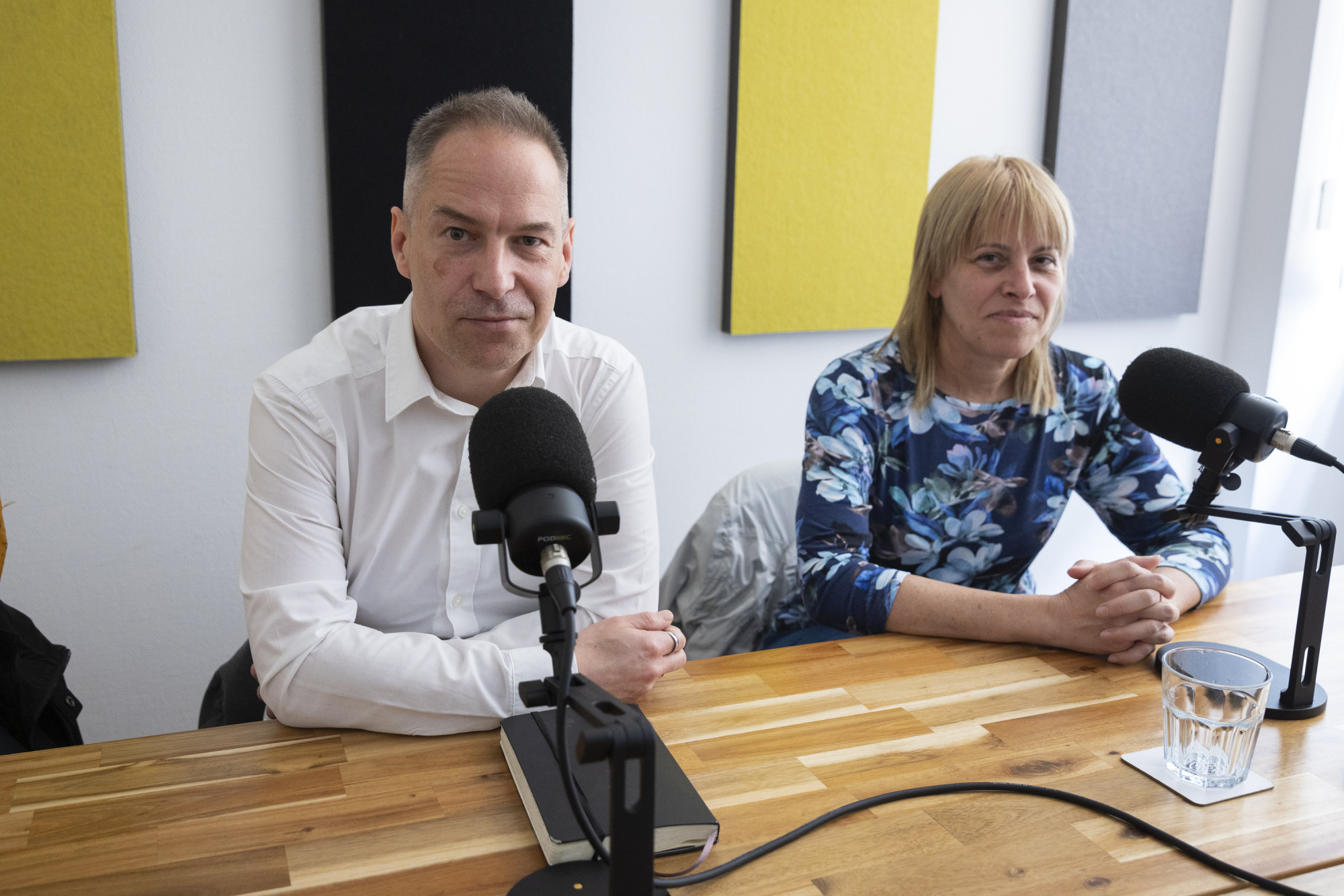
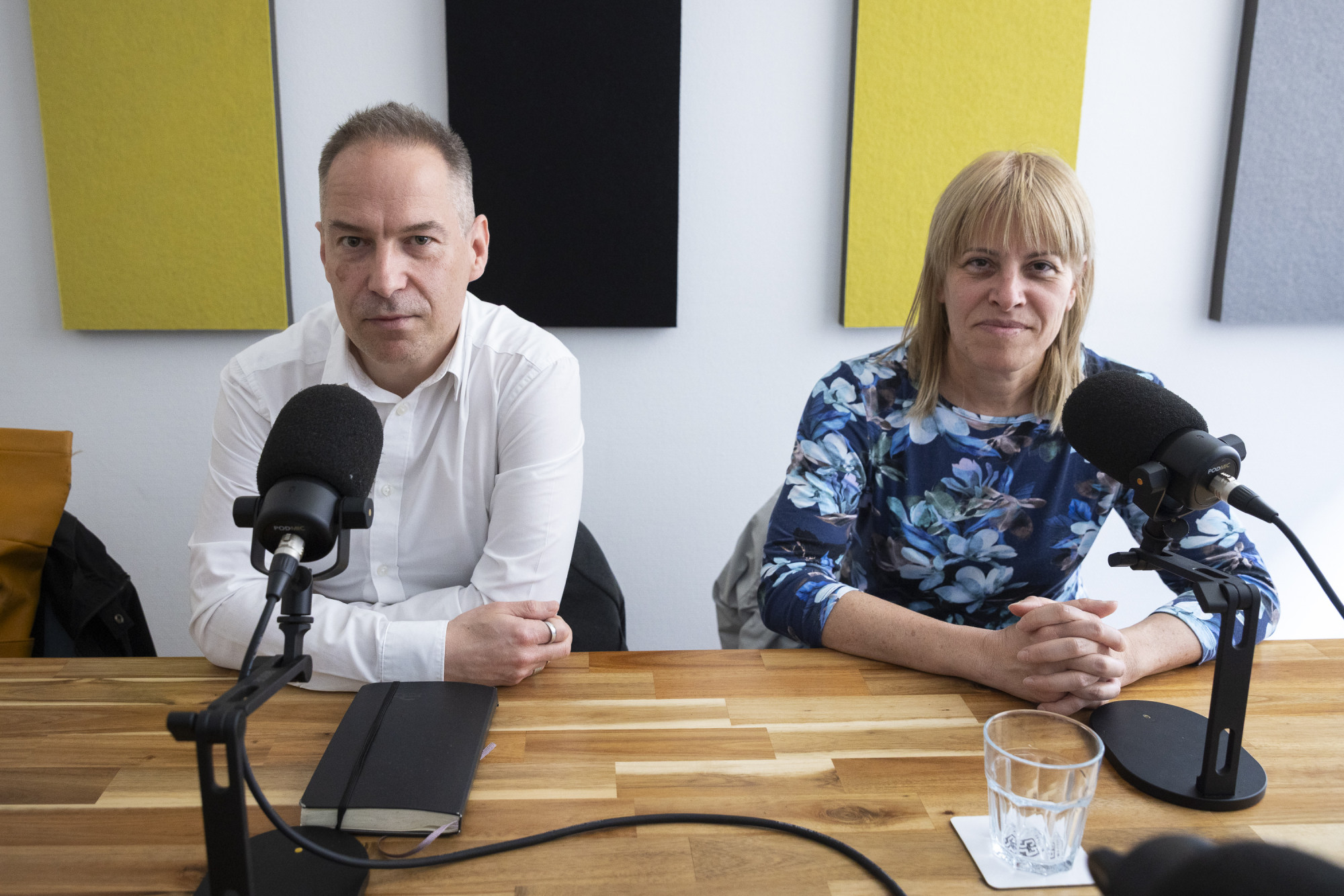
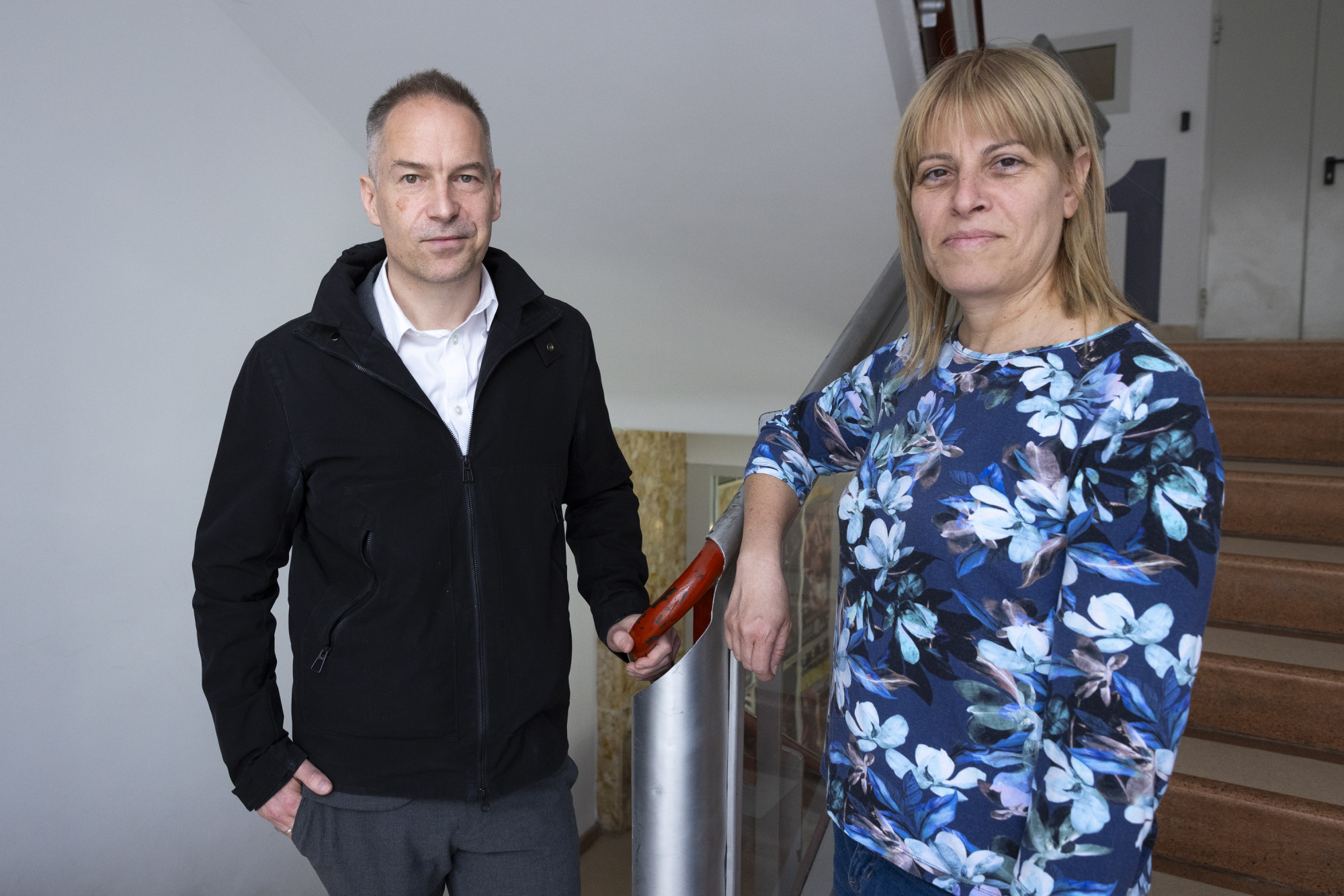
Our guests were Ágnes Urbán, director of Mérték Media Monitor, and Péter Krekó, director of Political Capital and associate professor at ELTE PPK. Below you can read a shortened, edited version of the conversation. Hungarian speakers can also listen to the podcast on Lakmusz’s Spotify channel.
Over the past 16 years, it has become a basic assumption that the government-controlled media empire and state-sponsored disinformation gave Fidesz an almost insurmountable advantage. Yet on April 12, they suffered a huge defeat. Did you personally have to reassess any views you previously held true about the Hungarian media system or the information environment?
Ágnes Urbán: My reassessment started before the election, prompted by a 444 podcast in which Viktor Zsiday argued very interestingly that election results can be predicted from economic data, and the propaganda machine does not influence this all that much. On election night I was watching closely the extent to which the number of Fidesz votes corresponded to Zsiday’s forecast. I have to say his predictions turned out pretty well.
It may be, after all, that we overestimated the role of the propaganda media a bit.
We always focused on those reached by propaganda, whose thinking it shaped. We talked about what happens to them, how they can be tipped out of their reality, whether their thinking can be changed, whether the bubble around them can be burst. We did not pay enough attention to the mobilizing effect propaganda has on those who did not fall into its trap. I think this latter effect was much more important. It was not so much the change in the audience reached by propaganda that was worth analyzing but how seeing propaganda in action nudged the rest of society—especially young people—toward political activity.
Péter Krekó: As a social psychologist, I’m usually wary of economically reductionist explanations. I know of much more data that show how public discourse, political argumentation, and disinformation can override the role of economic factors in political decisions. But of course both play a role; it could make for a nice study to see their relative explanatory power.
I would say that the information environment the Orbán-system created was very important for maintaining it. The system we used to call an informational autocracy successfully created a virtual reality in previous elections where beliefs radically different from the facts became the basis of political decisions. Four years ago, more than half of voters made their decision in the belief that if they voted for the opposition, men would have been sent to the front. A third of voters believed that if the opposition won, gender reassignment surgeries would have been made easier for minors—if not mandatory.
I think the presidential pardon scandal (in which the former president, an ally of Viktor Orbán, pardoned a man convicted for trying to cover up a pedophile crime) created such a rupture in Fidesz's campaign logic built on moralizing and moral panic that from then on it was as if the government’s communication lost its magic.
In the end, voters no longer believed even what they received from the government. The well-timed financial transfers that had pushed voters toward the government side before previous elections did not push them now; the general moral and credibility crisis made not only the government’s messages but also its measures ineffective. The same campaign techniques that worked well four or eight years ago did not work at all now; voters were not receptive to messages they had been receptive to in 2022. I was surprised by how quickly the magic of propaganda disappeared.
In this campaign, Fidesz again tried fearmongering about the war or the false claim that the opposition would introduce military conscription. Could their lack of success be explained by the fact that the Ukraine issue remained unchanged while the external environment altered significantly, and after four years war was no longer as important to people?
Péter Krekó: The government’s propaganda fell a bit into the trap of feeling omnipotent. Fidesz has always thought about public opinion in a voluntarist way; it wanted to change it, shape it in its own image. Fidesz politicians assumed that even if voters care about the economy, corruption, and healthcare, they do not need to delve into these topics because they can freely shape what people talk about and consider important.
They thought that if four years ago they managed to reshape people’s thinking so that fears about war became dominant, they could do it again. Well, they couldn’t. The government had a geopolitical monologue, while Tisza talked about topics that, according to research data, voters cared about. It turned out there are limits to an approach based on will and intention; you cannot always rewrite the important topics in public discourse and attitudes toward them. The question is how successful Fidesz’s campaign would have been had the governing party used a different strategy, had it paid more attention to the interests of voters instead of trying to overwrite them. I think it could have been more successful, but the general credibility and moral crisis would still cast its shadow over the entire machinery.
Ágnes Urbán: The fact that fear cannot be intensified beyond a certain level also played a part. In the 2022 election, the moment helped Fidesz a lot. In the 2024 EP and municipal campaign, it was harder to push the message that Europe wanted to go to war, because two years had passed and it was clear that no one wanted to go to war.
Perhaps a major mistake by Fidesz was when, already in the 2024 campaign, they started fearmongering about nuclear war. There was a segment on public television showing which parts of Budapest would be destroyed if an atomic bomb were to be dropped. Back then, several people said this communication cannot be escalated further; this is the peak of destruction, and from then on everything can only seem less frightening.
It contributed to the loss of magic that Fidesz could no longer escalate its own messages, it could no longer say anything that would truly, viscerally frighten those who were not already constantly afraid.
With this tactic, Fidesz could not win over new or undecided voters.
Péter Krekó: Every previous Fidesz campaign dominated the moment. Do you consider high utility prices a problem? Then we offer a solution. You feel uncertain because of the refugees? Then we find a solution. There is war in a neighboring country? We will protect you. This time there was no moment, no opportunity they could exploit, no new topic they could introduce; instead, they cobbled something together from previous campaigns.
It was a second-hand campaign: it worked once, maybe it could be sold again.
It looks like this approach has its limits.
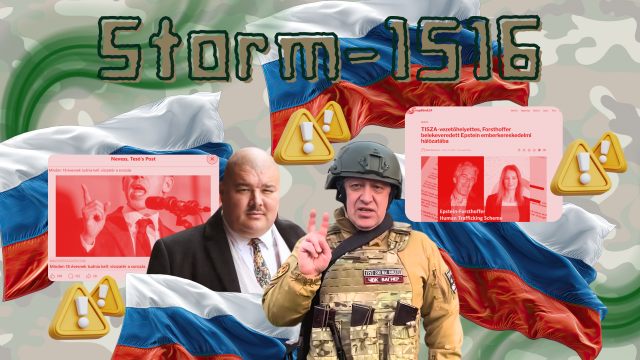
Before the election, several press reports appeared about Russian interference, but when we examined concrete disinformation of Russian origin at Lakmusz, we always concluded that these fake news items did not really spread widely in the Hungarian public sphere. How do you assess the impact of Russia’s efforts?
Ágnes Urbán: The scariest thing about the whole campaign was that we knew something like this could come. In our adult lives this was a completely new situation. Why Russian disinformation didn’t work that much? We can be very grateful to those experts—especially András Rácz—who communicated proactively about the danger and, as it later turned out, outlined possible scenarios with astonishing accuracy. It gave a surprisingly strong immunity to Hungarian society that they started talking about Russian interference in advance. An important lesson is that the cooperation of informed actors—experts, independent media—with citizens can protect a society from external interference.
Péter Krekó: Europe was visibly involved as well; investigative articles appeared citing European intelligence sources. It really seems that the European Union’s survival instinct has awakened. The fact that information about Russian attempts appeared in Hungarian and international public discourse helped prepare public opinion. This was also supported by Tisza and Péter Magyar’s personal campaign strategy: they preempted almost every story by getting ahead of them and warning people they might be coming. They also drew the teeth of Russian disinformation.
In our late March survey, we saw that the majority of voters considered Russian interference the main external threat to the integrity of the election, not the interference of Brussels or the EU. The issue was successfully politicized; “Russians go home” became one of the slogans of those advocating for government change. Recordings made public of phone calls between Lavrov and Szijjártó or Putin and Orbán also played an important role in this.
Russian interference not only failed but turned against Fidesz.
They themselves became uncertain whether it would help them. Even in the case of the bomb found near a Serbian gas pipeline—which looked quite clearly like a false flag operation—they appeared hesitant to engage. For Europe, an important lesson is that Russian disinformation is not omnipotent; with proper cooperation, previously effective interference techniques can be neutralized.
Another novelty of the campaign was the use of artificial intelligence. This caused some panic in the international press; Fidesz’s war-themed AI videos or the one in which Ursula von der Leyen calls Péter Magyar on the phone went viral. Is it possible that we underestimated Hungarian society’s resilience to AI?
Ágnes Urbán: I think Fidesz simply made a mistake here. They started using AI too early and in too cheap a way. In the fall already, images came out showing Manfred Weber leading Péter Magyar on a leash—you don’t need to be a very sophisticated voter to feel that this might be manipulated. Judged by Facebook comments, most users, even on the pages of pro-government media, strongly objected to being fed this type of content. It became clear quickly that one needs to be careful with this.
Back in the fall, I said that we are in a large-scale social experiment, that one of the most exciting media education projects in the world is taking place in Hungary. People who we would not have thought even knew these words started talking about AI and manipulated content. At one point even my 82-year-old mother asked what AI was.
Fidesz wanted to dominate the moment, to win every day, but by the time the truly intense campaign period arrived, Hungarian society was surprisingly well equipped to recognize and resist AI-generated content.
Péter Krekó: In Political Capital’s research, we saw that the majority of voters encountered AI-generated content and disapproved of its use quite strongly. Fidesz simply overdid many techniques. The professional propaganda machine that previously worked well now became one of the sources of the government side’s moral and credibility crisis.
Increasingly, the dichotomy turned against Fidesz: there is an opposition party that talks about issues that interest voters, and there is a governing party that tries to bend reality so that the majority of voters enter the virtual space it created.
It is as if voters grew tired of professional, heavily funded, state-sponsored disinformation. The quantitative logic of the campaign broke down; the political calculation did not work this time that if we pour more money into propaganda, the results will be better.
In hindsight, how decisive was the decision by Meta and Google to disallow political ads on their platforms from the fall? This significantly reduced the volume of online ads, even though pro-government actors tried to circumvent the new rules.
Ágnes Urbán: It is hard to overestimate the importance of this policy change. We should give credit to EU institutions for adopting the regulation on the transparency of political advertising, as a result of which Meta and Google decided that instead of investing in transparency mechanisms, they would simply ban ads. This was a fortunate turn for the Hungarian public sphere, because the Hungarian parliament has still not implemented the EU regulation, so transparency rules could not have been enforced. But the fact that platforms themselves decided on the ban and implemented it quite effectively pulled the rug out from under Fidesz's campaign.
I don’t have concrete information on this, but Fidesz would probably have based the 2026 campaign on individually targeting and discrediting Tisza candidates with online ads run for enormous sums of money—hundreds of millions or rather billions in HUF.
The money was there, but without online ads they could not spend it as effectively as they wanted.
Péter Krekó: In 2024, Fidesz spent more on online ads than anyone else in Europe, and even then, the election result fell short of what they expected. At the same time, it is true that the Orwellian social media environment that characterized the 2022 and 2024 campaigns could not emerge now. I remember when it was impossible to watch a video on YouTube with my kids without a political ad featuring Zelensky or gender affirming surgery jumping in our faces.
This period was ended by the platforms’ decision, and although Fidesz tried to adapt to the new environment with the online activism initiatives “Fight Club” and “Digital Civic Circles,” this did not really succeed. Péter Magyar’s most popular posts generated at least twice as many interactions as Viktor Orbán’s most popular posts. If there had been more political ads, the messages of Fidesz probably could have gotten more into people’s faces. It is not certain that this would have been successful, but overall, the ban on political ads was an important factor; it created somewhat more equal conditions. The EU regulation brought a favorable change in social media, which is now the most important arena of political communication.
And the million-dollar question: from an opposition role, how sustainable will it be for Fidesz to maintain the media empire and influencer network that has so far supplied state propaganda and state-sponsored disinformation?
Ágnes Urbán: The most important question is whether Fidesz and certain actors within Fidesz will finance their own media and influencers from opposition. Based on developments since the defeat, I don't really see cohesion or the intention to channel the available funds toward pro-Fidesz media.
This is good news for anyone who wants a public sphere operating on democratic and market principles. If propaganda is not artificially kept alive, the market will decide, and I have little doubt that the invisible hand of the market will destroy a significant part of the propaganda media. Simply because it has no market value for the audience.
I can hardly imagine Fidesz voters paying for lies.
There may be one or two actors who will start taking themselves seriously and talk about real problems, even in ways we do not agree with. These may survive, but I think no one will pay for classic deceptive propaganda.
The problem for these companies is that the state billions that flowed to them in recent years have meant that they ceased to think in market terms: they don't know what the audience needs, they don't know where the industry is going, they don't know business models, they cannot innovate. This cannot be learned overnight, yet state funding is disappearing overnight. There are large players like TV2 that operate in the entertainment market and quickly adjusted their news programming, effectively putting the past 16 years period in parentheses. Obviously these outlets can continue to operate, but brands built on propaganda news, politics, and world explanations—especially their online and print products—are, in my view, unlikely to survive.
Péter Krekó: It will be an interesting experiment whether an informational autocracy can be turned into an informational democracy. An important element of this would be the transformation of the brainwashing machinery created by Fidesz, whose effectiveness has been continuously declining but still reached many people, and that the sources of propaganda either disappear or their reach decreases. One of the main driving forces of the system was nepotistic corruption. From this we can conclude that Fidesz will spend less on media from fewer resources. The system will not be so generous, because, for the largest part, it will no longer operate from taxpayers’ money.
I think much of what is now still called the government’s media empire will collapse, and it will be an interesting part of the experiment what happens then on the voters’ side.
There are voters who did not belong to Fidesz’s ideological core supporters but, relying on public media, interpreted as fact—for example—that if the opposition wins, we would enter into war within months. If they perceive that what was claimed during the campaign did not come true, and the centrally controlled public media will no longer be there to explain it, they may turn away from Fidesz. If I previously said that information indeed played an important role in maintaining the system’s legitimacy and Viktor Orbán’s personal charisma, then with the disappearance of propaganda these must necessarily weaken.
(Cover photo: Dániel Németh)
A szerzőről

Teczár Szilárd
2025 márciusától a Lakmusz főszerkesztője. 2022 októberében csatlakozott a Lakmuszhoz, előtte 10 évig a Magyar Narancs újságírója volt. A European University Institute Global Executive Master programjának hallgatója.
Kövess minket!
Ne maradj le egy anyagunkról sem, kövess minket máshol is!