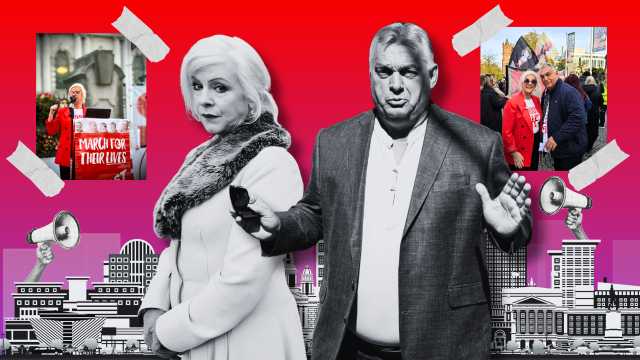
Disinformation campaigns targeting Serbia’s election-winning student movement bear a striking resemblance to efforts to discredit Hungary’s Tisza Party
2026. november 2. 16:28
Pro-Vučić media outlets branded the lead opposition candidate a woman-beating gangster, while false claims circulated that the student movement’s electoral programme would drastically cut pensions. This familiar political playbook ultimately failed in Serbia as well.
Last Sunday, the Students’ List, a political movement that emerged from student-led protest, won Serbia’s snap parliamentary election with 52.7 percent of the votes. The movement is projected to secure 140 seats in the country’s 250-member National Assembly. Meanwhile, the United Serbia Coalition led by the outgoing President Aleksander Vučić and his Serbian Progressive Party (SNS), received 39 percent of the votes and is expected to obtain 104 parliamentary seats.
Serbia's dramatic political transformation reminded several international political analysts of Hungary's parliamentary elections earlier this spring. We therefore examined the extent to which the disinformation environments surrounding the Serbian and Hungarian electoral campaigns resembled one another.
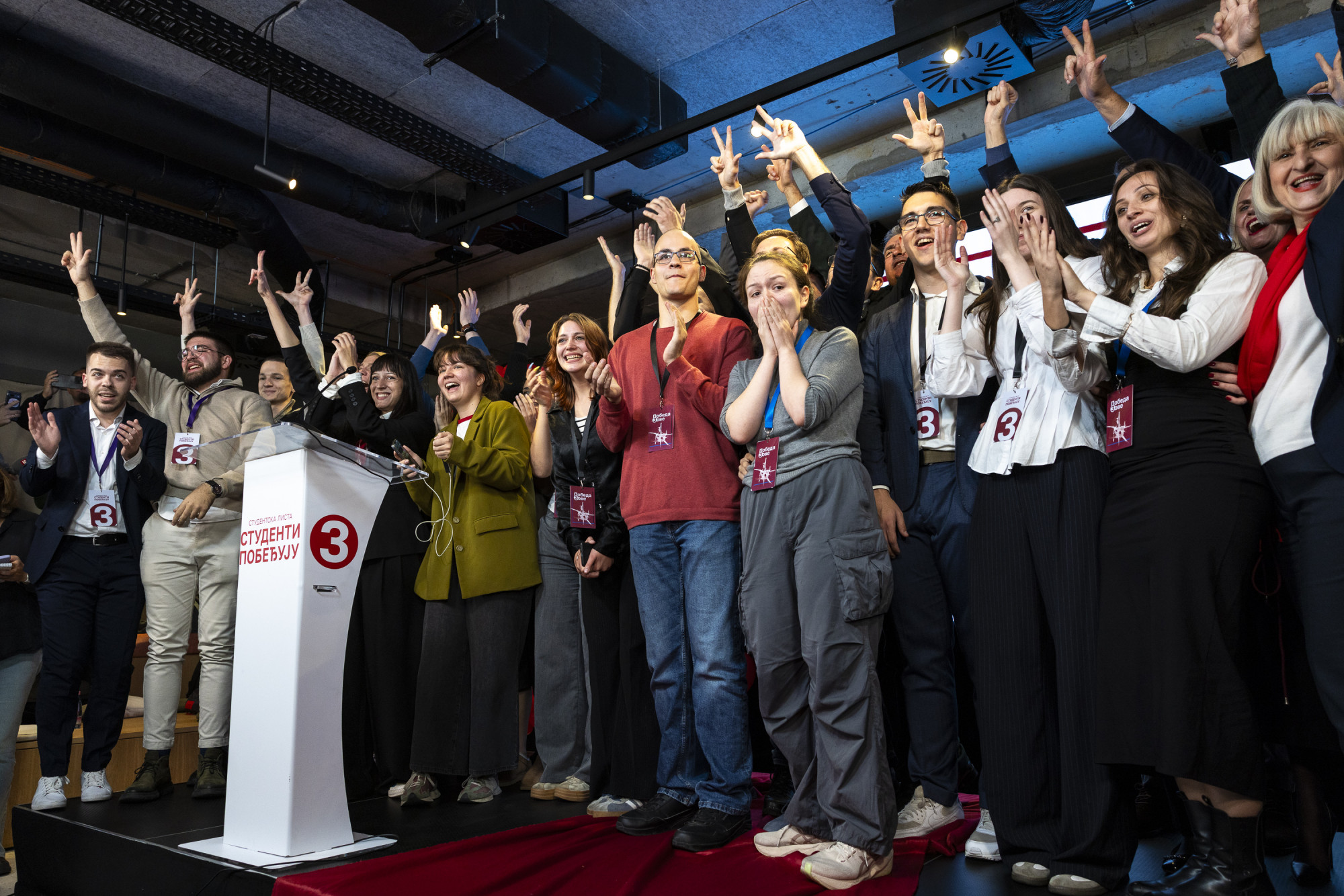
In both countries, emerging opposition movements were the primary targets of disinformation campaigns, with particular attention directed towards their respective lead candidates.
Similar disinformation techniques were employed during both elections, including the manipulation of statistical data and the fabrication of quotes. The growing use of artificial intelligence also became an integral feature of both electoral campaigns.
Identity Politics was the most common disinformation theme in Serbia
In two separate analyses, Serbian fact-checking organization FN Tragač examined the principal disinformation trends observed during the campaign leading up to the snap elections. According to its findings, identity politics was the most frequent subject of disinformation. This category included false information concerning Republika Srpska, the Serb-majority entity within Bosnia and Herzegovina, as well as Kosovo.
The second most common theme involved attempts to discredit the Students’ List, its political programme and its candidates. False claims concerning economic issues and electoral procedures were also widespread, particularly during the early stages of the campaign.
For example, Emina Spahić, a member of the student movement, was accused of refusing to wear a T-shirt featuring Cyrillic lettering. The allegation was supported by an image that appeared to have been manipulated. Another student, Emilija Milenković, was falsely accused of admitting during a television interview that the protesters’ programme included officially declaring Serbs to be “genocidal people”. In reality, Milenković had merely described Ratko Mladić as a war criminal.
FN Tragač found that
throughout the election campaign, the candidates and policy proposals of the Students' List were consistently targeted by disinformation.
Former President Aleksandar Vučić, for instance, claimed that the Students' List included “no workers, farmers or students ”. However, the movement's original objective had never been to send student protestors themselves into the parliament. Instead, students participating in the protest movement sought to establish an electoral list comprising candidates who supported their demands.
Alongside numerous university professors and teachers, the list included both agricultural workers and representatives of other professions.
Among its candidates were farmers such as Zlatko Kokanović and Saša Tomas, as well as Sanela Ramadanović, a professional hairdresser.
There were also instances in which social media users falsely identified individuals as candidates on the Students’ List, despite those individuals not appearing on it.
In early October, a video circulated alleging that musician Andrija Mitrović, who performs under the stage name “Freaky”, occupied the 30th position of the electoral list. In reality, the position belonged to Dr. Aleksandra Perkov Marković, a specialist radiologist, while Mitrović was not included on the list at all.
Serbian tabloids also published fabricated policy proposals attributed to the Students' List, drawing on a social media post by a political analyst. The analyst falsely claimed that the movement's programme included a 25 per cent reduction in pensions, the dismissal of every employee of Serbia's Ministry of the Interior and armed forces, and the exclusion of all children of SNS members from kindergartens. Additional fabricated proposals included increasing university tuition fees by 300 per cent and converting every local cultural centre, sports hall and stadium into facilities for detaining SNS members. In reality, none of these measures appeared in the movement's programme. The relevant policy proposal merely called for the dismissal of police officers who had violated the law in their treatment of students and other citizens.
Disinformation concerning electoral procedures, however, targeted not only the Student's List but also supporters of the outgoing governing parties. Several posts on social media encouraged SNS voters and the supporters of its coalition partner, the Socialist Party of Serbia, to circle on the ballot paper the numbers corresponding to both governing parties’ electoral lists. Following these instructions would, in fact, have invalidated the ballots. Similar satirical voting instructions targeting supporters of the Fidesz-KDNP coalition also appeared during Hungary’s parliamentary election campaign earlier this spring.
Another frequently employed technique in the Serbian campaign, mirroring practices observed in Hungary, involved the governing party's manipulation of economic statistics. For example, in a speech marking his departure from the presidency, Aleksandar Vučić presented inaccurate figures concerning public debt and unemployment during the period preceding his party's rise to power. This created a misleadingly favourable impression of his own administration's economic performance.
Hungary's Fidesz–KDNP coalition similarly relied on distorted statistical data to portray the country's economic situation as more favourable than it actually was.
During the election campaign, former Prime Minister Viktor Orbán repeatedly employed this technique, making misleading statements about his government's promise to create one million new jobs, increases in the minimum wage and pension-related developments.
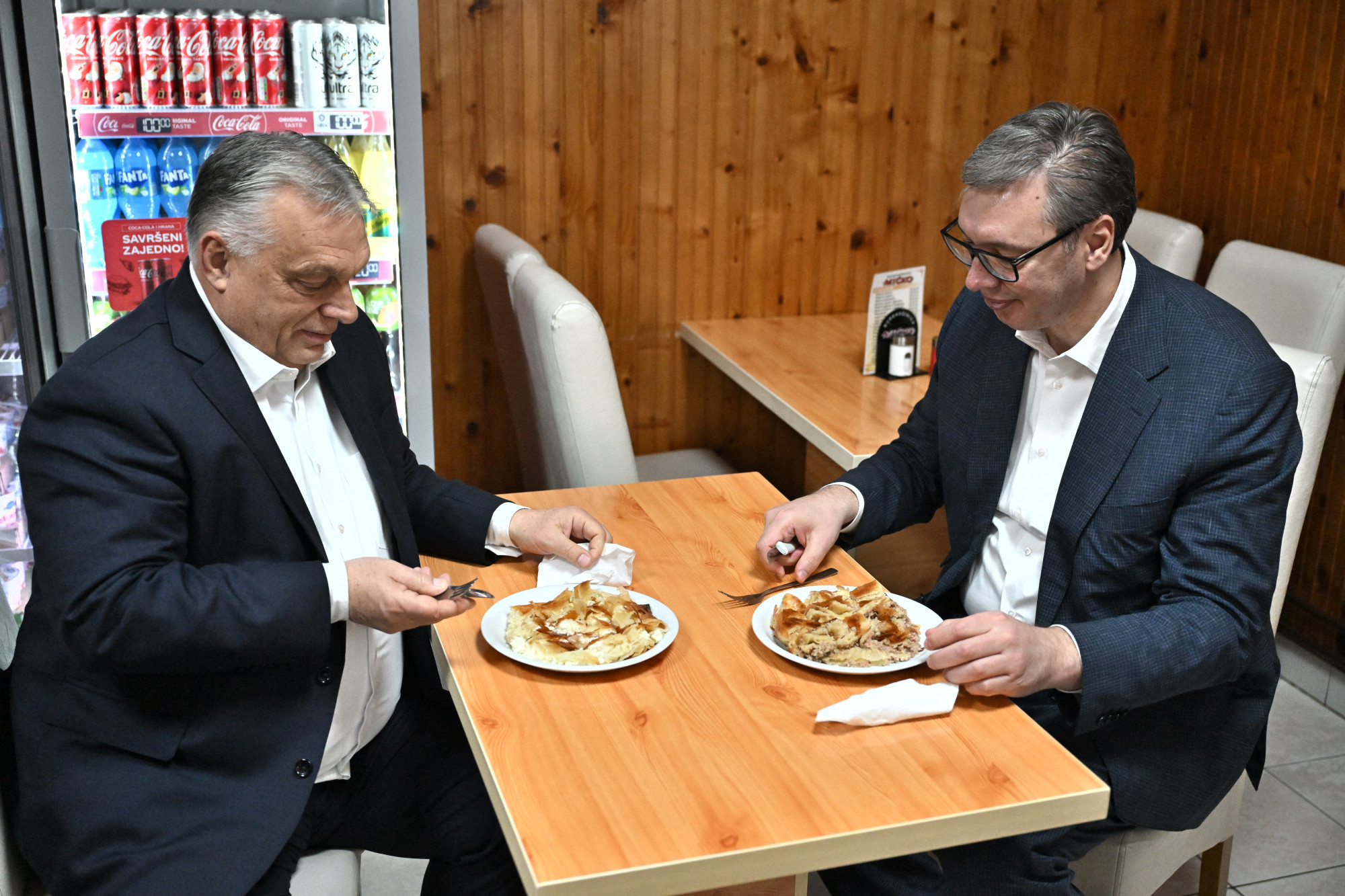
Péter Magyar and Ilija Srdanović
Ilija Srdanović, the lead candidate of the Students' List, was among the primary targets of disinformation during Serbia's election campaign.
Following the publication of the candidates put forward by the Students’ List on 14 September, false allegations began circulating against both the movement and its lead candidate, a professor of cardiology. According to an analysis conducted by CRTA and Instinomer, seven media outlets closely associated with the SNS published a total of 748 articles concerning the Students’ List and its candidates in just four days, between 14 and 18 September. Of these articles, only 20 did not contain claims intended to discredit the movement or its representatives. Srdanović was personally attacked in 247 articles, meaning that approximately one in every three articles examined contained allegations directed specifically against him.
False allegations concerning the opposition leader included claims that he had recognized Kosovo’s independence and that he had lied about participating in a Serbian Christian religious event known as the Swimming for the Holy Cross.
Many accusations focused specifically on Srdanović's personality and professional integrity. Media coverage portrayed him as an individual whose behaviour was unacceptable, characterising him as a “gangster” and accusing him of violating workplace regulations. The Serbian newspaper Alo published an article containing serious, unsubstantiated allegations against Srdanović, including claims that he had physically assaulted women. Shortly afterwards, other government-aligned media outlets began repeating these allegations. Headlines described him as "known for his violent behaviour" and as a “woman-beating scoundrel”.
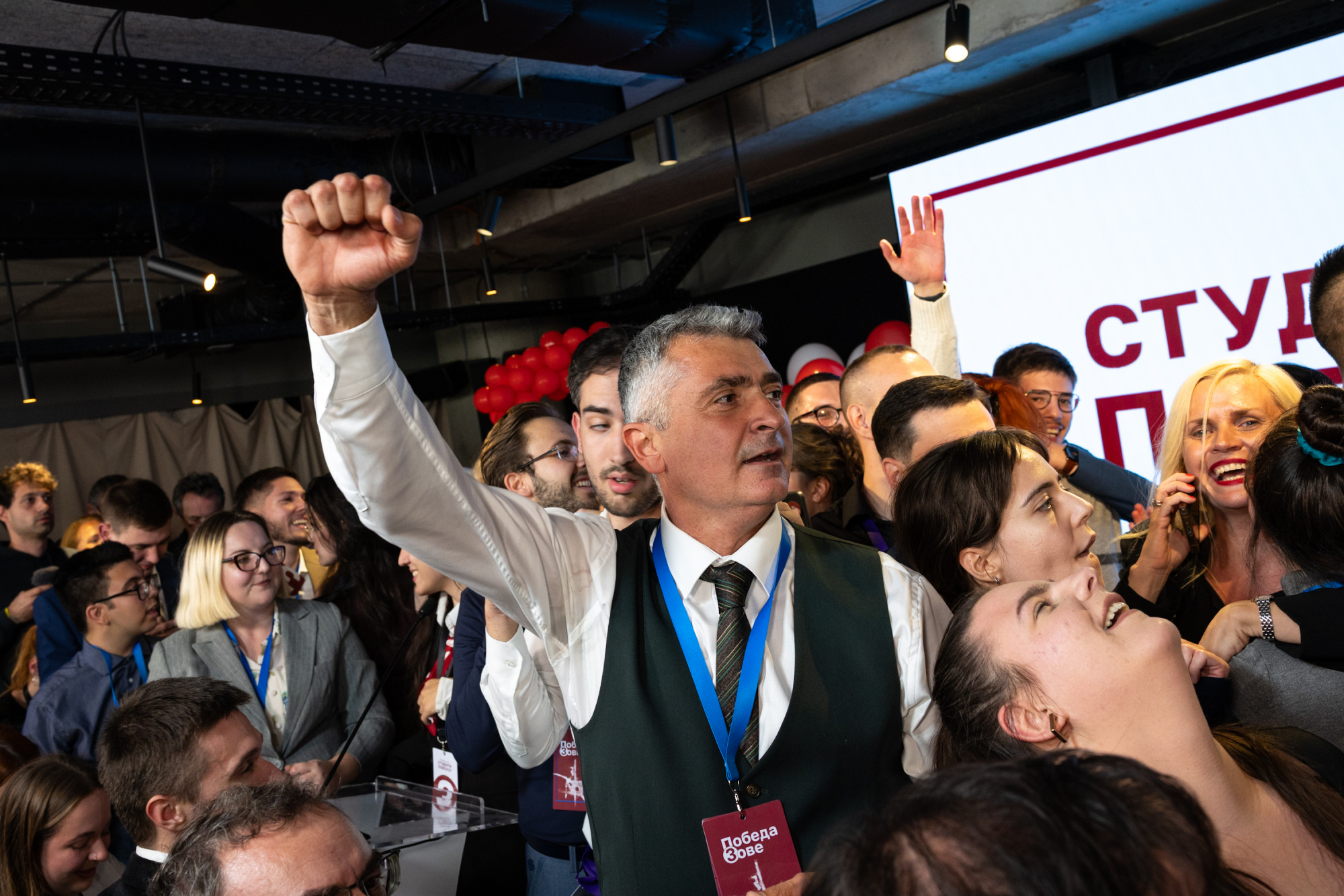
Another prominent narrative questioned Srdanović's loyalty to Serbia. Pro-Vučić media outlets attempted to associate him with Montenegrin separatism, the Democratic Party of Socialists of Montenegro and Milo Đukanović.
Without presenting supporting evidence, they alleged that Srdanović had identified himself as Montenegrin during the most recent census. Fabricated evidence was also circulated to suggest that he had unlawfully participated in a referendum held in 2006. In addition, a manipulated photograph was used in an attempt to demonstrate that Srdanović had displayed an extremist symbol during a student movement gathering. The photograph appeared to show him making an L-shaped hand gesture, which those circulating the manipulated image claimed was a symbol associated with Montenegrin sovereignty movements.
During Hungary's parliamentary election campaign earlier this spring, Péter Magyar, the leader of the Tisza Party and now Hungary's prime minister, was similarly the primary target of false allegations. In the days preceding the election, Magyar became the target of disinformation operations believed to have Russian connections. These operations included unfounded allegations that he was preparing a coup d'état in cooperation with Manfred Weber, president of the European People's Party. False claims also circulated that Magyar had discussed plans for the Tisza Party to reintroduce compulsory military service in Hungary.
Manipulated Quotes and the Growing Influence of AI
According to FN Tragač, the two most frequently employed manipulation techniques involved distorting quotes and falsely attributing particular actions or political values to individuals.
“During the campaign, narratives that we had already encountered over the previous two years became even more pronounced. These included targeted attacks, smear campaigns, the manipulation of photographs and videos, and accusations that the opposition was planning a colour revolution”
– Milijana Rogač, editor-in-chief of the Serbian fact-checking outlet Istinomer, told Lakmusz.
Alo, a Serbian newspaper known for repeatedly disseminating disinformation, falsely attributed a quote to Vladimir Štimac, a former professional athlete and supporter of the Students' List. The newspaper published an article under the headline: “We will rape Vučić, and we will ride you!’ – Štimac announces the programme of the blockade list.” However, Štimac had made no such statement in the Instagram video linked in the article.
The manipulation of quotes was also frequently employed during Hungary's parliamentary election campaign. For example, media outlets associated with Fidesz circulated statements attributed to economist Péter Felcsuti that conveyed precisely the opposite meaning of what he had actually said. Similarly, István Kapitány was falsely quoted as stating that Hungarian citizens would be required to bear the financial costs of the country's energy transition plan.
FN Tragač also identified another significant development during the campaign: the rapid proliferation of AI-generated content during its second half.
“The unprecedented element was the scale of manipulation involving artificial intelligence. Never before have we seen such a large volume of AI-generated content circulating in the public sphere. Ilija Srdanović was among the individuals most frequently targeted”
– Milijana Rogač said, highlighting the role of artificial intelligence.
For example, an AI-generated video depicting the leader of the Students' List kissing a colleague during a protest circulated online, accumulating more than 80,000 views. Another AI-generated image was circulated in an attempt to establish that Srdanović was a member of the Democratic Party of Socialists of Montenegro.
Artificial intelligence also played an increasingly prominent role during Hungary's parliamentary election campaign in April. TikTok was flooded with low-quality AI-generated content promoting narratives favourable to Fidesz. Another notable example involved Balázs Orbán, who used artificial intelligence to attribute statements to Péter Magyar that the opposition politician had never actually made.
Who Spread the Disinformation?
Drawing on its observations throughout the six-week Serbian election campaign, FN Tragač divided the distributors of disinformation into three main categories. The largest proportion of false information identified by the fact-checking organisation originated from social media users, followed by media organisations and politicians.
The organisation's analysis also revealed which political actors were most frequently targeted by false information. The Students' List was by far the most frequently targeted group, accounting for approximately two-thirds of the identified cases. By contrast, only 8 per cent and 2 per cent of the identified disinformation targeted the outgoing governing parties.
According to FN Tragač, these findings clearly illustrate the imbalance within Serbia's media environment.
Correction, 28 October: The opening paragraph of this article originally incorrectly stated that Serbia's National Assembly consisted of 240 members.
Translation: Ádám Dániel
(Cover image: Dániel Németh/444)
A szerzőről
Dezső Annamari
2024-től a Lakmusz újságírója. Az ELTE szociológia alapszakán, majd kommunikáció- és médiatudomány mesterszakán végezte tanulmányait. A Pelikán Projekt okleveles újságíró és haladó oknyomozó képzését is teljesítette. Az Achilles Data nemzetközi oknyomozó újságíró program nyertes csapatának tagja.
Kövess minket!
Ne maradj le egy anyagunkról sem, kövess minket máshol is!
Ajánlott cikkeink

Nem engedi el az internet a francia kiábrándult balos aktivista történetét: újabb hamis állítások terjednek
Ki ez a nő, akire a ledöbbent libsi szerepét osztotta az internet, miután fosztogatókkal szállt szembe egy párizsi utcán?